2026-10-11 · Gary Watson
Why Furnace Filters Clog Faster Near Pikes Peak and How to Stay Ahead
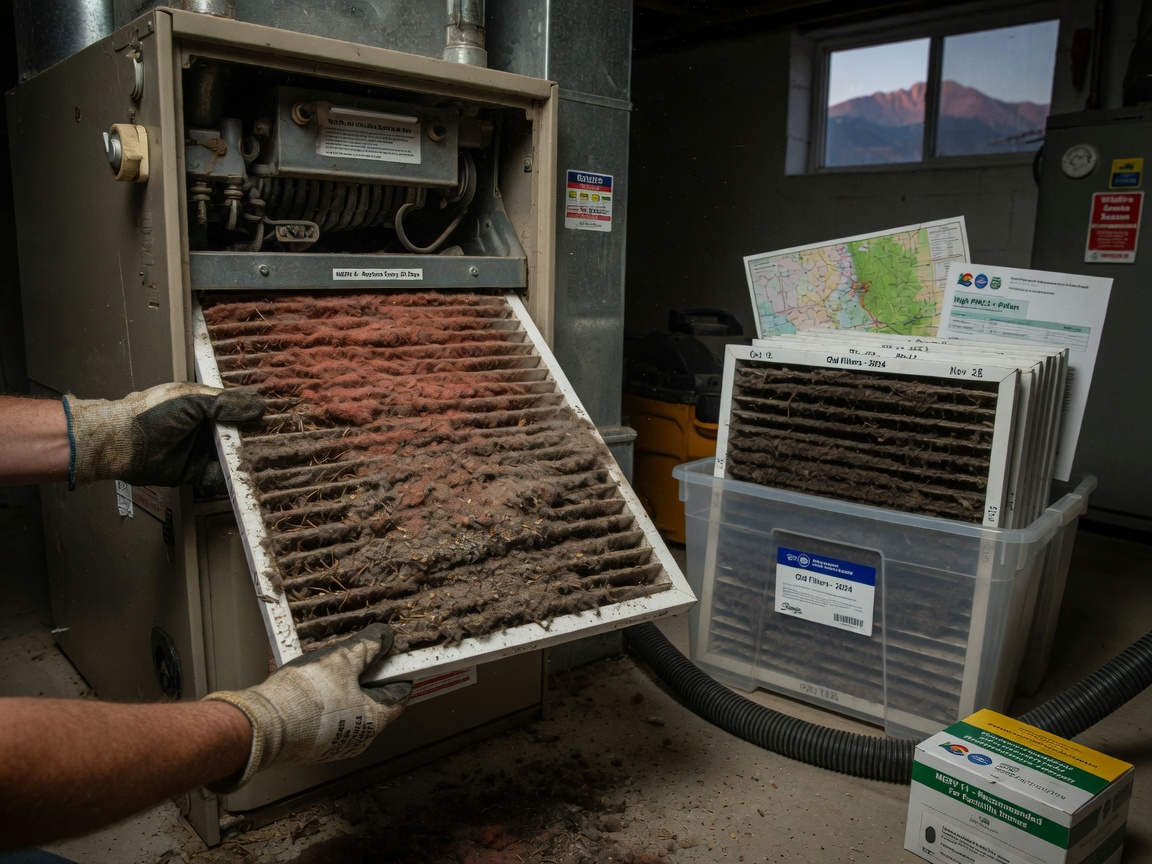
Furnace filters in Colorado Springs typically clog 25% to 50% faster than in many other regions, often requiring replacement every 30 to 60 days instead of the standard 90 days. This accelerated clogging is primarily due to our distinctive semi-arid, high-plains climate, which brings drier air, more airborne dust, and seasonal winds that stir up particulates from the surrounding natural landscape, especially near prominent features like Pikes Peak. Homes in areas such as Old Colorado City, Broadmoor, or even higher up in Briargate and Rockrimmon, experience these conditions acutely, leading to a higher concentration of fine dust and pollen entering HVAC systems. Without diligent filter maintenance, this can significantly reduce furnace efficiency, increase energy bills, and even lead to premature system breakdowns, necessitating more frequent furnace repair.
The Unique Environmental Factors of El Paso County
El Paso County's geography plays a significant role in the air quality inside our homes. The semi-arid climate means less natural precipitation to settle dust, leaving more airborne particles. Combine this with the prevailing winds that sweep across the plains and down from the mountains, and you have a recipe for dust accumulation. Areas closer to natural open spaces, like those bordering Garden of the Gods or near Cheyenne Mountain, are particularly susceptible. The dry soil, especially after long periods without rain, easily becomes airborne, carrying fine silt and sand directly into your furnace's intake. This isn't just about visible dust; it includes microscopic particulates that can quickly overwhelm a standard furnace filter, reducing its effectiveness and airflow.
Local Dust Sources and Their Impact on Filters
Beyond natural dust, Colorado Springs has specific local sources that contribute to faster filter clogging. Construction activity, especially in growing areas like Briargate and Rockrimmon, constantly churns up soil. The unpaved roads and trails popular with outdoor enthusiasts near Manitou Springs and the foothills of Pikes Peak also contribute. Even the red clay-like soil common in many parts of El Paso County becomes a fine, pervasive dust when dry. This combination of natural and human-made particulate matter means that your furnace filter is working overtime. A clogged filter restricts airflow, forcing your furnace to work harder, which can lead to overheating and, eventually, a need for a professional Furnace Repair. This increased strain can also shorten the lifespan of your furnace components.
The Role of Pikes Peak and Mountain Winds
The majestic presence of Pikes Peak isn't just a scenic backdrop; it's a major influencer on local weather patterns and, consequently, indoor air quality. Winds descending from the mountain slopes, often referred to as 'downslope winds,' can pick up and carry significant amounts of dust and natural debris, distributing it across the Colorado Springs area, including neighborhoods like Old Colorado City and Broadmoor. These winds can be particularly strong during certain seasons, acting like a natural dust storm that funnels particulates directly towards residential areas. Homes situated in the direct path of these wind currents will often find their furnace filters accumulating debris at an accelerated rate, making regular checks and replacements even more critical for maintaining efficient heating.
How Climate Affects Indoor Air Quality and Filter Lifespan
Our cold winters, which see temperatures frequently drop below freezing, mean furnaces run for extended periods. The longer your furnace operates, the more air it processes, and thus, the more particles it attempts to filter. During these cold snaps, especially when the furnace is working hard to keep homes warm from Fountain to Security-Widefield, a dirty filter can quickly become a major problem. It reduces heating efficiency, increases energy consumption, and can lead to issues like a Furnace Blowing Cold Air or even a complete breakdown. The dry air also contributes to static electricity, which can make dust cling more readily to surfaces and, inevitably, to your furnace filter, further accelerating the clogging process. This constant demand on the filtration system during the heating season is a primary reason for accelerated filter degradation.
Signs Your Furnace Filter Needs Immediate Attention
Recognizing the signs of a clogged filter early can prevent more significant problems. Given our local conditions, these signs might appear sooner than you'd expect. Look out for:
- Reduced Airflow: If you notice weaker airflow from your vents, especially compared to when the filter was new, it's a strong indicator. You might feel less heat even if the furnace is running.
- Increased Dust in Your Home: Paradoxically, a clogged filter can allow more dust to bypass it and circulate through your home, settling on furniture and surfaces.
- Higher Energy Bills: A furnace struggling to pull air through a dirty filter consumes more energy to maintain the desired temperature. You might see a noticeable spike in your utility costs.
- Unusual Noises: A strained furnace motor or whistling sounds from the return air vent can signal restricted airflow due to a severely clogged filter.
- Furnace Overheating: In extreme cases, a lack of airflow can cause your furnace to overheat and shut down prematurely as a safety measure. If your Furnace Keeps Shutting Off, a dirty filter is often the first thing to check.